
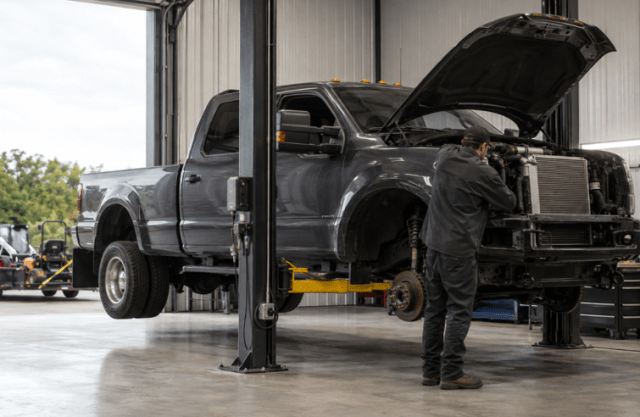
Diesel trucks are valued for producing the torque needed to pull trailers and carry heavy loads. However, towing and hauling place additional strain on the engine, transmission, cooling system, brakes, suspension, and driveline. A truck that performs normally when empty may develop heat, vibration, or power problems under load.
Repairing these vehicles effectively requires understanding how they are used—not simply reading the mileage.
Start With an Accurate Workload History
A useful diagnosis begins with questions about the truck’s regular duties. Important details include trailer weight, cargo weight, trip length, road grades, climate, stop-and-go driving, and how often the truck operates near its rated limits.
The technician should also know when the problem occurs. A loss of power that appears only on a steep grade may have a different cause from a hesitation that happens during unloaded driving. Warning lights, unusual exhaust smoke, rising temperatures, fluid leaks, and changes in fuel economy can provide additional clues.
Drivers should never exceed the truck’s weight, axle, payload, or towing ratings. Repairs cannot compensate for an overloaded or improperly balanced combination.
Engine and Fuel-System Concerns
Heavy loads require the engine to produce more power for longer periods. Restricted air filters, fuel-delivery problems, leaking charge-air connections, or malfunctioning sensors may become noticeable only when demand increases.
A diesel fuel system depends on clean fuel and precise pressure. Contamination, clogged filters, injector problems, or air entering the system can contribute to hard starting, rough operation, reduced power, and excessive fuel use.
Turbocharger and intake-system faults can also limit performance. Diagnosis may involve checking boost pressure, hoses, clamps, airflow data, and exhaust restrictions rather than automatically replacing major components.
Cooling System Performance
Heat management is critical for a towing vehicle. The engine and transmission generate more heat while climbing, accelerating, or operating in warm weather. Low coolant, a restricted radiator, damaged hoses, a weak pressure cap, fan problems, or a failing thermostat can reduce cooling capacity.
The cooling stack may collect dirt, insects, and debris between its layers, limiting airflow even when the front surface looks clean. Repair should include identifying why the truck overheated rather than simply refilling the coolant.
Continuing to drive with a high temperature warning can turn a manageable cooling problem into severe engine damage.
Transmission and Driveline Repairs
Automatic transmission fluid helps control hydraulic operation, lubrication, and heat. Fluid that is degraded, contaminated, or low may contribute to slipping, harsh shifts, delayed engagement, or overheating.
Towing can also reveal worn universal joints, carrier bearings, driveshaft problems, differential issues, or excessive play in driveline components. Symptoms may include vibration, clunking, humming, or shuddering under acceleration.
Fluid service intervals and specifications should follow the vehicle’s maintenance information, particularly when towing qualifies as severe service.
Brakes, Suspension, and Tires
The truck’s brakes must control its own weight while the trailer’s correctly adjusted braking system manages the trailer. Worn pads, damaged rotors, sticking calipers, old fluid, or corroded hardware can reduce stopping consistency.
Suspension components also carry increased loads. Springs, shocks, bushings, ball joints, steering linkages, and wheel bearings should be checked for wear or damage. A sagging rear suspension may indicate excessive weight, worn components, or poor load distribution.
Tires must have the proper size, load rating, condition, and inflation pressure. Heat buildup, uneven wear, or overloading can increase the risk of tire failure.
Preventive Maintenance Reduces Downtime
Trucks used for demanding work may require more frequent inspections and service than lightly driven vehicles. Engine oil, filters, transmission fluid, coolant, differentials, transfer cases, and fuel-water separators should receive attention at the appropriate intervals.
Before a major trip, inspect tires, brakes, lights, fluids, belts, hoses, trailer connections, and the hitch system. Address warning lights, overheating, unusual smoke, and new vibrations before attaching a heavy load.
Reliable diesel truck repair is not limited to fixing a single failed part. It considers the complete towing system, the vehicle’s workload, and the conditions that created the problem. Careful diagnosis and load-appropriate maintenance help preserve performance, safety, and long-term durability.
This post was written by a professional at Kepkee’s Diesel & Performance. Kepkee’s Diesel & Performance is a full-service diesel repair company in Largo, Florida, specializing in automotive engine repairs, diagnostics, maintenance, transmission work, and performance upgrades. For drivers searching for Diesel Truck Performance Upgrades in St Petersburg, FL, our team provides dependable support throughout Pinellas County. As one of the leading diesel repair companies near you, we offer expert guidance and reliable solutions, making us a trusted choice for diesel repair near you focused on quality, value, and performance.

