
Winter does not break cars randomly. It breaks them at their weakest points, which is its most irritating quality. The battery that was marginal in October fails in January. The tyre that was borderline on tread all autumn becomes a hazard the morning the road is wet and cold simultaneously. The windscreen wiper that smeared in September becomes a visibility problem the morning the sleet starts horizontally.
None of this is bad luck. It is deferred maintenance, finding the worst possible moment.
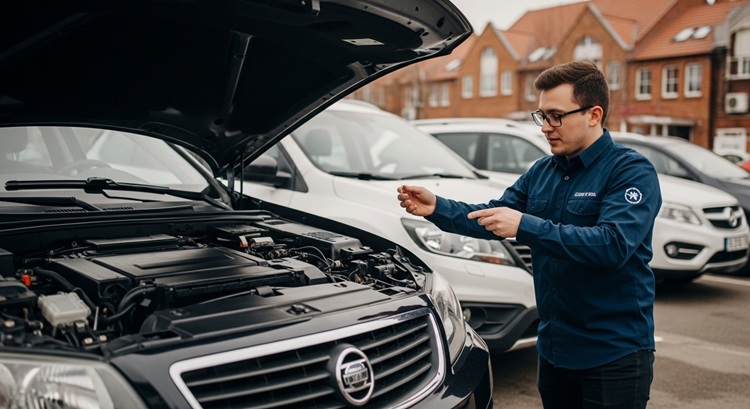
1. The Battery Is the First Thing to Check
Cold weather reduces what a battery can deliver. A battery that starts an engine adequately in mild conditions may not have enough capacity to do the same job at minus five. The battery does not fail because the cold broke it. It fails because the cold revealed it was already borderline.
D. Wells Auto tests battery condition and cold cranking capacity as part of a pre-winter check. The test takes minutes. The result is either confirmation that the battery is fine or a warning that it needs replacement before the first cold snap removes the choice. Discovering the battery’s condition at eight in the morning in a car park in January is a less convenient time to receive that information.
2. Tyre Pressure Changes With Temperature, and Most People Do Not Check It
Tyre pressure drops roughly one PSI for every ten degrees of temperature decrease. A tyre correctly inflated in September may be visibly soft by December without a puncture being involved. Underinflated tyres handle worse in wet and cold conditions, wear unevenly, and use more fuel. The check takes two minutes, and the result is relevant from October through March.
Tread depth matters more in winter than at any other time. Below 3mm, wet-weather stopping distances increase in ways that most drivers have never tested and would not enjoy discovering. D. Wells Auto includes tread depth measurement in standard winter servicing.
3. Visibility Is Not Optional in Winter
Wiper blades that leave a smear across the windscreen in August leave that smear at sixty miles per hour in driving rain in November. The screenwash that was fine in summer can freeze in the reservoir when temperatures drop below its rated temperature. The rear demister that stopped working sometime last year matters considerably more in winter than it did when it stopped.
These are three small things. Each is trivial to fix before winter. Each is significantly less trivial to deal with while driving in conditions that require them to work.
4. Lights, Antifreeze, and the Emergency Basics
Winter days are shorter. A rear light that has been out for a month on familiar local roads becomes a legal and safety issue on a long journey in the dark. Coolant antifreeze concentration should be checked before temperatures drop. And a car without a blanket, a torch, a phone charger, and some form of traction aid in the boot is a car that is less prepared for winter than it needs to be.
Conclusion
Winter car preparation is not excessive caution. It is the difference between a car that handles winter and one that illustrates why preparation matters. Battery, tyres, visibility, and lights are the four checks that cover most of what winter finds first.
 driveonline.car.blog